
IPMI 2027 – International Conference on
Information Processing in Medical Imaging
Lake Stukely, QC, Canada – June 27 – July 02, 2027
Days
Hours
Minutes
Seconds
DAYS TO SUBMISSION
at beautiful Lake Stukely, QC, where leading medical imaging minds meet and discussions never stop.
One of the most important and the longest-standing conference in medical imaging.
Continuing almost 60 years of scientific excellence.
Share your Algorithms with a Soul: Breakthroughs and rigorous analysis, not leaderboard chasing.
Timeline | |
|---|---|
| Paper Abstract Due | Dec 07, 2026 – end of day, AoE |
| Full Paper Submission | Dec 14, 2026 – (no extensions) |
| Review Period | Dec 18–Jan 11, 2027 |
| Discussion Period | Jan 18–29, 2027 |
| Selection Period | Feb 01–15, 2027 |
| Decision Notification | Feb 15, 2027 |
| Conference | Jun 27 – Jul 02, 2027 |
IPMI 2027 uses OpenReview for submissions, reviews, and notifications:
Share your "Algorithms with a Soul": Breakthroughs and rigorous analysis, not leaderboard chasing.
Papers have 12 pages, excluding references, in Springer LNCS format, with no supplementary material allowed. Strict adherence avoids desk rejection. Submissions must be original unpublished work, not under review elsewhere during the IPMI review period, and will undergo a double-blind review. Authors must attend the conference in person to engage in discussions. Each accepted paper must be accompanied by a separate registration. One registration cannot cover multiple papers. Onsite language assistance will be available for those in need.
Use the Springer LNCS template for formatting your paper. LaTeX is preferred.
The review process is double-blind. Reviewers will not know your names, nor will you know the reviewers' names. Paper content must be anonymized. Remove your names and affiliations in the submitted pdf. Check your acknowledgments, data description, and any other places that may reveal your identity. Be mindful if referring to your own work. Failure to do so will result in desk rejection. Further information in the MICCAI guide for anonymization.
Submissions must be original unpublished work, not under review, nor accepted elsewhere during the IPMI review period. Your submitted version may be posted during peer review on arXiv. Reviewers are instructed to not actively search for the authors' identities.
The use of LLMs is allowed for minor editions, such as general-purpose writing and grammar assistance at the sentence level. Using LLMs to generate large sections of text at the paragraph level, or more, is not allowed. Papers that are mainly generated by LLMs will be rejected. Authors carry full responsibility for the contents of their papers, including any content generated by LLMs. LLMs are not eligible for authorship. See our Scientific Code of Ethics.
At IPMI 2027, we (authors, speakers, reviewers, organizers and attendees) meet to exchange ideas freely. We learn, dine, and socialize together. This code thus applies at all times, including sessions, meals, accommodation, social activities, shared travel and online channels.
By registering, you agree to it.
| Good practice 👍 |
Bad practice 🙅 |
| Inviting a newcomer to join your table at dinner | Deliberately excluding or mocking someone |
| Accepting “No, thanks” the first time | Repeatedly inviting someone to your room after they decline |
| Challenging a result firmly but politely in Q&A | Diminishing a speaker or lecturing them in Q&A |
| Asking your question, then letting others speak | Asking a fifth follow-up while others wait |
| Asking before posting a photo of someone | Sharing photos of individuals or slides without consent |
| Moving late conversations away from bedrooms | Being loud in corridors at 2 a.m. |
| Thanking kitchen and cleaning staff | Being rude to venue staff |
| “I was joking” or “I was drunk” is not an excuse. | |
If you experience or witness a problem, or just need someone to talk to, contact the organizers at any time:
If you prefer not to approach them, or one is involved, report to the IPMI Board: https://editions.ipmi-conf.org/
Reports are handled promptly and as confidentially as possible, including after the event. Nobody will face retaliation for reporting in good faith. If you feel uncomfortable in your shared room, ask any organizer, no reason needed.
Depending on severity of misconduct, organizers may:
Participants also remain bound by the ethics rules of their own institutions and funders.
Original text written by the organizing committee and light copy-edited with assistance from Google Gemini in accordance with our guidelines. All revisions were reviewed and approved by the organizers.
At IPMI 2027, we (authors, speakers, reviewers, organizers and attendees) will act with honesty, fairness and respect. This code covers all submissions, presentations, and scientific discussions, including those held informally during meals and shared accommodation.
By participating (submitting, reviewing, attending), you agree to it.
| Good practice 👍 |
Bad practice 🙅 |
| Showing a failed experiment as a limitation | Dropping outliers to make results look stronger |
| Citing the group whose method you build on | Presenting a colleague's figure without credit |
| Asking before photographing a poster | Posting a speaker's unpublished slides online |
| Following up with someone whose dinner-table idea inspired you | Submitting that idea as your own after the conference |
| Declaring that you co-authored with a submission's author before reviewing it | Reviewing a competitor's work you have a stake in |
| Questioning a speaker's method politely | Mocking a student's question in a session |
Authors are responsible for every claim in their work. The ideas, claims, and reasoning must be your own.
| Status |
Use of AI |
| ✅ Permitted | Minor: Proofreading (spelling, grammar, punctuation, citation format). Light copyediting for clarity and concision, with no change in substance. |
| ⚠️ Borderline: use with care and disclose | Moderate: Substantial line editing or restructuring that keeps the author’s claims and reasoning. Back-and-forth human-AI revision. Translation. |
| 🚫 Not permitted | Major: AI writing passages from brief prompts. AI changing claims, reasoning, or framing. Claiming lightly edited AI-written text as your own. AI generating full slides. |
Reviewers are responsible for every assessment in their review. Critical evaluation, technical assessment, and scoring must be your own. Submissions are strictly confidential (no uploads to AI).
| Status | Use of AI |
| ✅ Permitted | Minor: Proofreading of review (spelling, grammar, punctuation). Light copyediting for clarity and concision, with no change in substance. |
| ⚠️ Borderline: use with care and disclose | Moderate: Substantial line editing or restructuring that keeps core review feedback. |
| 🚫 Not permitted | Major: Uploading or pasting parts of submissions into AI tools. AI generating reviews or summaries from papers or brief notes. AI evaluating claims, novelty, or methods. Submitting lightly edited AI-written reviews as your own. |
Report concerns to the organizers at any time:
If you prefer not to approach them, or one is involved, report to the Board: https://editions.ipmi-conf.org/
Reports are handled promptly and as confidentially as possible, including after the event. Nobody will face retaliation for reporting in good faith.
Depending on severity of scientific misconduct, organizers may:
Participants also remain bound by the ethics rules of their own institutions and funders.
Original text written by the organizing committee and light copy-edited with assistance from Google Gemini in accordance with our guidelines. All revisions were reviewed and approved by the organizers.
June 27 – July 02, 2027 • Lake Stukely, Orford, Quebec, Canada
Join us for IPMI 2027 at beautiful Lake Stukely, Quebec, where leading medical imaging minds meet and discussions never stop. Share your Algorithms with a Soul: Breakthroughs and rigorous analysis, not leaderboard chasing.
🌐 Web: https://2027.ipmi-conf.org • https://editions.ipmi-conf.org
💬 Contact: team-2027@ipmi-conf.org
🗓️ Dates: June 27 – July 02, 2027
📍 Location: Lake Stukely, Quebec, Canada
⏰ Submission: December 07, 2026
🎖️ About IPMI: Continuing almost 60 years of scientific excellence, IPMI remains the influential premier forum for methodological breakthroughs in medical image computing.
🔍 The Experience: Known for its immersive retreat-like atmosphere, IPMI fosters active scientific debate and in-depth discussion of new methodological developments.
📝 The Call: We invite high-quality submissions presenting innovative algorithms and sound theoretical foundations in biomedical imaging.
Join the 30th biennial IPMI conference from June 27 to July 02, 2027, at beautiful Lake Stukely in Quebec, Canada. Continuing almost 60 years of scientific excellence, IPMI is the influential premier forum for methodological breakthroughs in medical image computing. Known for its immersive retreat-like atmosphere, IPMI fosters active scientific debate and in-depth discussion of new methodological developments. We invite high-quality submissions featuring innovative algorithms and sound theoretical foundations in biomedical imaging.
● Paper Abstract Submission: December 07, 2026 – end of day, AoE
● Full Paper Submission: December 14, 2026 (no extensions)
● Discussion Period: January 18–29, 2027
● Decision Notification: February 15, 2027
● Conference: June 27 – July 02, 2027
IPMI 2027 honors its 58-year tradition of deep scientific exchange at the Jouvence Center on beautiful Lake Stukely in Canada. Its retreat-like atmosphere is located 90 minutes east of Montreal. There, discussion never stops. Modern facilities blend with pristine woodland, allowing interactions to flow from formal sessions to lakeside trails or lakeshore breaks. Whether hiking, canoeing or in the conference center, attendees engage in the uninterrupted networking and in influential debates that define IPMI’s history.
Following topics, and beyond, are welcome:
● Mathematical Foundations and Computational Methods
Inverse problems and optimization theory • Computational anatomy and physiology • Geometric learning • Statistical and computational modeling • Quantum computing applications
● Image Formation and Reconstruction
Image acquisition and reconstruction methods • Image registration, segmentation and fusion • Functional, diffusion and molecular imaging • Multidimensional, multimodality, multiscale problems
● Machine Learning and Intelligence
Novel deep learning architectures and theory • Foundation models and multimodal learning • Generative modeling and synthesis • Transfer learning, domain adaptation and federated approaches • Uncertainty quantification and robust learning • Interpretable and causal learning methods
● Clinical Applications and Translation
Image-guided interventions and surgery • Computer-aided diagnosis and treatment • Imaging genomics and omics integration • Digital twins and augmented reality applications
● Visualization and Human-AI Interaction
Advanced visualization and immersive interfaces • Privacy-preserving and sustainable computing
Papers have 12 pages, excluding references, in Springer LNCS format, with no supplementary material allowed. Strict adherence avoids desk rejection. Submissions must be original unpublished work, not under review elsewhere during the IPMI review period, and will undergo a double-blind review. Authors must attend the conference in person to engage in discussions. Each accepted paper must be accompanied by a separate registration. One registration cannot cover multiple papers. Onsite language assistance will be available for those in need. Conference proceedings are traditionally published in the Springer Lecture Notes in Computer Science (LNCS) series.
General Chairs: Hervé Lombaert, Julia Schnabel
Program Chairs: Maria Zuluaga, Ninon Burgos, Ismail Ben Ayed, Pierre-Marc Jodoin
Local Chairs: Maxime Descoteaux, Christian Desrosiers
Scientific Advisors: Kaleem Siddiqi, Tal Arbel, Ipek Oguz
Digital Chair: Hoel Kervadec
Website: https://2027.ipmi-conf.org • https://editions.ipmi-conf.org
Contact: team-2027@ipmi-conf.org
IPMI 2027 will be at beautiful Lake Stukely, QC, Canada.

IPMI is a full-board conference, including lodging and meals. Registration packages will be known at a later stage, typically around the notification date to accommodate logistics
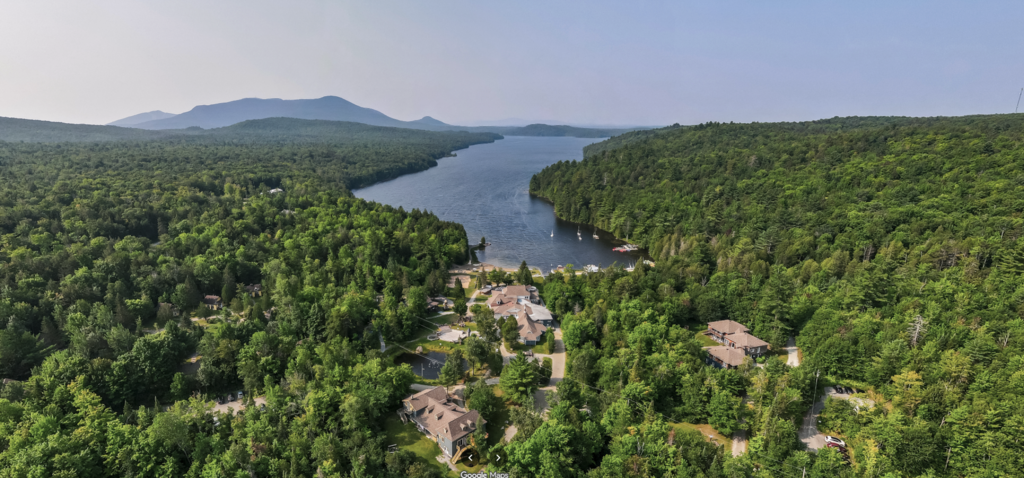
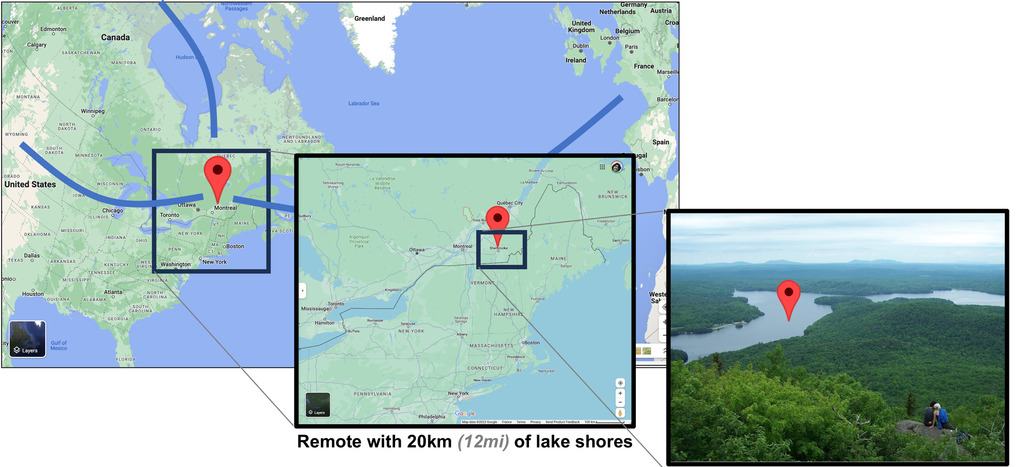
The venue is within a 1.5-hour drive of Montreal and a 4-hour drive of Boston. The closest international airport is Montreal (YUL).
Local events (estimated dates)
Info: The registration fees will be all-inclusive (covering accommodation and meals), and will be announced around the notification date to accommodate logistics.
| General Chairs: | Hervé Lombaert, Julia Schnabel |
| Program Chairs: | Maria Zuluaga, Ninon Burgos, Ismail Ben Ayed, Pierre-Marc Jodoin |
| Local Chairs: | Maxime Descoteaux, Christian Desrosiers |
| Scientific Advisors: | Kaleem Siddiqi, Tal Arbel, Ipek Oguz |
| Digital Chair: | Hoel Kervadec |










Albert Chung (IPMI Chair 2019)
Sara Garbarino (Erbsmann Prize 2019)
Ben Glocker (Erbsmann Prize 2007)
Qi Dou
Sylvain Bouix
Diana Mateus
Jose Dolz
Sarah Parisot
Marco Lorenzi
Linwei Wang
Ender Konukoglu
Miaomiao Zhang
Xavier Pennec
Anonymous selection of ipmi-experienced scientists
Gold
to be announced soon
Silver
to be announced soon
Bronze
to be announced soon
To Sponsor IPMI 2027 : team-2027@ipmi-conf.org
June 27 – July 02, 2027 • Lake Stukely, Orford, Quebec, Canada
Venue: Jouvence Center, Quebec, Canada
Expected number of participants: 120
IPMI 2027 will be hosted at the beautiful Jouvence Conference Centre on Lake Stukely, Quebec, Canada, a secluded natural setting that reflects the unique spirit of the International Conference on Information Processing in Medical Imaging (IPMI). For nearly six decades, IPMI has served as one of the premier forums for methodological advances in medical imaging, bringing together leading researchers working at the intersection of medical image analysis, machine learning, computer vision, mathematics, physics, and biomedical engineering. IPMI is recognized for its strong emphasis on fundamental and theoretical contributions that shape the future of medical imaging science. The core mission of IPMI 2027 is to foster deep scientific exchange and rigorous discussion around the next generation of imaging methodologies. Unlike larger convention-style conferences, IPMI is intentionally designed as an immersive retreat where attendees live, dine, and interact together. Its hallmark format encourages unlimited questions, extended discussions, and active debate following every presentation, creating an environment where ideas are challenged, refined, and advanced through direct engagement among participants. The conference relaxed and secluded setting helps break down barriers between disciplines and career stages, allowing collaborations/innovations to emerge naturally.
IPMI attracts a highly international audience of researchers from academia, industry, and healthcare institutions. The conference is widely regarded as one of the most selective and influential meetings in medical image computing, with participation from many of the world's leading research groups. Accepted papers are traditionally centered on novel algorithms, mathematical foundations, image reconstruction, machine learning, segmentation, registration, computational modeling, and other fundamental advances in biomedical imaging.
IPMI 2027 offers sponsors direct access to 120 high-impact attendees, spanning principal investigators and research leaders (~40%), industry scientists and clinical research innovators (~20%), and emerging scientific talent (~40%), at a cross-section driving today's discoveries and tomorrow's decisions.
IPMI's small size is one of its greatest strengths. Every attendee participates directly in the scientific dialogue, creating a uniquely collegial atmosphere where discussions continue from the lecture hall to meals, outdoor activities, and informal gatherings. Many of the field's most influential ideas and collaborations have emerged from this environment of sustained and open scientific exchange.
All prices are in Canadian dollars. Package availability and benefit delivery should be confirmed with the organizing committee before payment.
| Benefit | Bronze |
Silver |
Gold |
|---|---|---|---|
| Investment | $1,250 | $2,500 | $5,000 |
| Logo on conference website | Included | Included | Included |
| Logo on banners | - | Included | Included |
| Logo in conference book | - | Included | Included |
| Opening and closing acknowledgments | - | - | Included |
| Insert in attendee welcome package | - | - | Included |
| Registration benefit | $250 discount | $500 discount | $1,000 discount |
| Full-page program advertisement | - | - | $1,000 add-on |
Gold adds verbal recognition, an attendee-package insert, and the largest registration benefit. Silver adds visibility at the venue and in the conference book. Bronze provides digital visibility.
Gold Advertising Add On
Gold sponsors may purchase one full-page advertisement in the conference program book for an additional $1,000 CAD. Confirm artwork dimensions, file format, and submission deadline with the organizing committee before preparing the advertisement.
Important Notes
Expected number of participants: 120
Gold – $5,000 CAD (about €3,000)
Silver – $2,500 CAD (about €1,500)
Bronze – $1,250 CAD (about €750)
To confirm availability and request payment instructions, contact the IPMI 2027 organizing team. Please include your preferred package, company name, billing contact, and the name of the attendee who may use the registration benefit.
Document: IPMI 2027 Sponsorship Packages (pdf)
Contact: team-2027@ipmi-conf.org